

Yesterday’s post was made as an abstract argument: that hope is the more demanding position, and that building an alternative to extraction is worth exploring. Some of you may know me personally, and have some idea of what I’ve been working on recently, but others may have stumbled across me, or this post by accident.
Most of you will now be wondering who’s actually making the claim, and the reasons why. Better to try to address those questions now, rather than any suspicion you have trailing through the rest of the series.
Who’s writing these posts?
I’ll try and keep this section brief - a story, rather than a boring CV-style list of accomplishments, because the story itself matters more than a list, and because the most important thing about my story isn’t the list itself, it’s the shape of it.
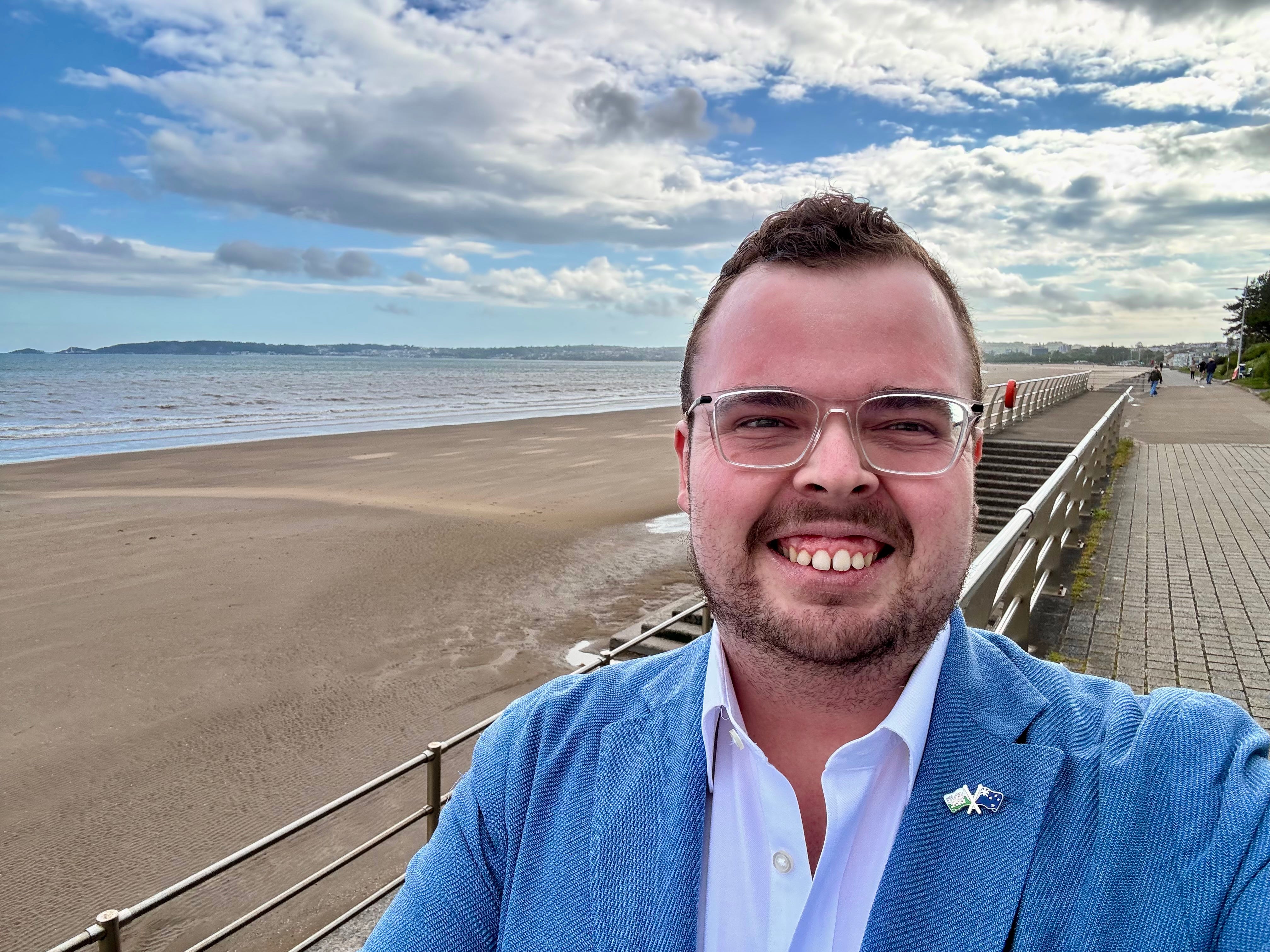
First things first - I’m Daf. Welsh by birth and at heart, but I’ve now found my home here in Aotearoa New Zealand, after spending two and a half years here in Auckland. I’ve spent most of my life building things, companies mostly, but really - whatever the solution to a problem in front of me is.
I started my first business by accident, at eleven, building a website for a family friend. From there, it turned into building websites for a lot of other people, and somewhere in the middle I picked up a nickname that stuck: Q.
It started as a joke - Skyfall had just come out, with Ben Whishaw as a very young Q meeting Bond for the first time, and Bond looks him over and says, “Because you still have spots.”
I was young enough at the time, that the same line got aimed at me, except the joke turned out truer than it was meant to: Q is the quartermaster - the one who solves the problems for everyone in the field. That’s more or less what I’m good at.

Since then I’ve done the same thing over and over, in various different ways.
I built a location-based safety app to help public transport users to get home safely. After I realised that was a feature and not a product, I took the technology underneath it and turned it into an ethical outdoor advertising analytics platform. When COVID hit, that same technology turned out to be useful for the first wave of contact tracing, until the big platforms built something better and we stepped aside.
Somewhere in the middle of all that, I got to represent the Welsh Government on a trade mission to MIT, and to fly the flag for Wales at SXSW in Texas, an early hint that a small place can be taken seriously a long way from home.


Then I co-founded LitterLotto, and spent four years on it, partnering with some of the largest brands in the world, and getting a very close, very unglamorous education in how extraction actually works, especially where nature is concerned, and in what it takes to build something that doesn’t quietly depend on it.


If there’s a thread, it’s that I rarely start from scratch. I start from what’s already in front of me and make an unusual connection to something else.
Someone once told me I work like a chef: a bit of this, that person over there, this technical fix, that structural one, until it becomes a dish. My real skill isn’t just a single discipline. I can write the code when I have to, but that’s not the point. The point is the zero-to-one part, taking something from nothing to something real, and seeing the join between industries that don’t usually talk to each other.
Most weeks it will be me writing the posts. But now and then I’ll hand over to a guest, someone who can articulate something more clearly than I can, from a discipline, a vantage, or a lived experience that isn’t mine to claim. I’ll always say when a piece isn’t mine. A case for collaboration told only ever in one voice would be quietly proving its own critics right.
Two and a half years ago I moved to the other side of the world to point that same instinct at something much bigger than any one company. But to explain why the instinct is there at all, I have to go back a lot further than eleven, and a lot closer to home.
Where I started out…
The instinct for this framework was never a defined strategy. It’s been with me from the start.

I’m Welsh, and Wales is a small country that has always been richer in the things you can’t put in a bank than the things you can: a language, a great deal of music, a deep supply of history, and an unforced habit of looking after your own. Nobody there would call any of that capital.
But it is exactly the kind of value that never reaches a balance sheet and holds a place together regardless, and growing up inside it leaves you permanently unconvinced by any account of worth that only counts the money.
Wales also has a fair claim to the first modern version of the idea I’ve ended up spending my life on. Robert Owen, born up the road in Newtown, was a businessman before he was anything else, and a genuinely successful one.
What set him apart was a conviction that an enterprise is answerable to the people and the place it draws its value from, and not just its accounts, and that treating them well isn’t charity but simply the better way to run things. He built a business to prove it, and he was right. Two centuries on, most of the economy still hasn’t caught up.
The other Welsh voice I keep coming back to is Raymond Williams, who wrote a line that underpins this entire series:
“to be truly radical is to make hope possible, rather than despair convincing.”
He meant it as an anchor, not an ornament, and that is how I hold it. It has done more work in my thinking than any economics author.
Something I want to make clear is that Collaborative Capital is not just a framework I’ve adopted on a whim. It’s something that I’ve been practising throughout everything I’ve worked on, from the start.
This series is my way of articulating what I’ve built, learned, and what went wrong over the last decade.
Where I am now…
Two and a half years ago, shortly after stepping away from LitterLotto, I moved to Aotearoa New Zealand to start an impact venture fund.

I came to support good companies. What I got instead was an education in why so many of them cannot get the backing they need. The short version is that the problem is rarely the idea, or even the people.
It is access: who is allowed near capital, who is allowed to own the upside, and how much real value goes uncounted because the machinery that allocates money can only see one kind of it.
I had seen versions of this before. I had not seen it this clearly, or from this close.
That is the work I have been doing since, quietly building answers to that access problem, and I will have specific things to show you before this series is over. In the meantime I have done the other thing you do in a country this size: got in amongst it.


I mentor and coach where I can add value, and I’ve made a couple of small angel investments, not because the cheques are large but because being a real participant, with something at stake, is the only way I know to understand a place rather than just observe it.
And a country this size shows you something a larger one manages to hide. The collaborative instinct here is unusually strong, as it is in Wales: people help each other, doors open, the ecosystem quietly wants you to win.

But it is also fragmented, and it works largely in the shadows, generous and effective and almost never celebrated, because it lacks the institutional backing that would let it shout its successes from the rooftops. The value is real. What’s missing is the structure to make it visible, and to let it build on itself.
There’s the obvious objection to address from the start: I live here, so of course I think this is the best place to start. I’ll cover that argument in more detail later in the series, when the case for Aotearoa New Zealand has to stand on the structure, rather than sentiment. For now, I promise not to just wave away issues like this.
Where we’re heading…
For a while now I have been doing the thing I have always done, only with the whole of it at once rather than one company at a time: taking everything I have learned about how value actually gets made, and who ends up owning it, and distilling it into a single idea.
What I intend to do with it is the harder half. I do not want to add another sharp description of what is wrong; there are plenty of those, and I have written my share. I want to build the alternative, in the open, and make the case for it well enough that other people want to build it too.
Some of what that looks like in practice I have been working on quietly already, and I will have real things to show before this series is done. The rest of it is genuinely open, which is the point.
Why this, why now?
I could’ve decided to launch the solutions and platforms we’re building first, and developed this framework in the background, but that goes against the core argument that this series is trying to deliver.
Instead, I’ve chosen to frame it into an argument that is bigger than any single product - a framework that can be expanded on and developed as we learn, and I’m doing that in public, and in instalments over the next few weeks, because if the argument is right, it should matter more than any one attempt to act on it, mine included.
That is my personal stake in this. This is the one post in the series that is about me, and it works precisely because the other posts are not.
Next week: the diagnosis starts. What the current system actually does, and why that was done intentionally.
If you had a magic wand ✨
The question I ask in every meeting, and answer here every week: if you had a magic wand, what are the three things you’d need right now? Mine, this week:
Other people who’ve moved between two small countries and made something useful of the gap.
The names of people who understood collaborative economics long before it was fashionable, so I can learn from them.
An honest read on whether “outsider who only just arrived” is a strength or a liability here.
Now you. What are your three?
Send me a message with them, and tell me if there’s anything I can help with. I read every reply, and I answer.