

First, an apology for being late this week. I had intended to get this out earlier, but between the hackathon last weekend, the usual work, and taking longer than expected to work out what I actually wanted to say here, the week got away from me.
The hackathon is probably a good place to start, though.
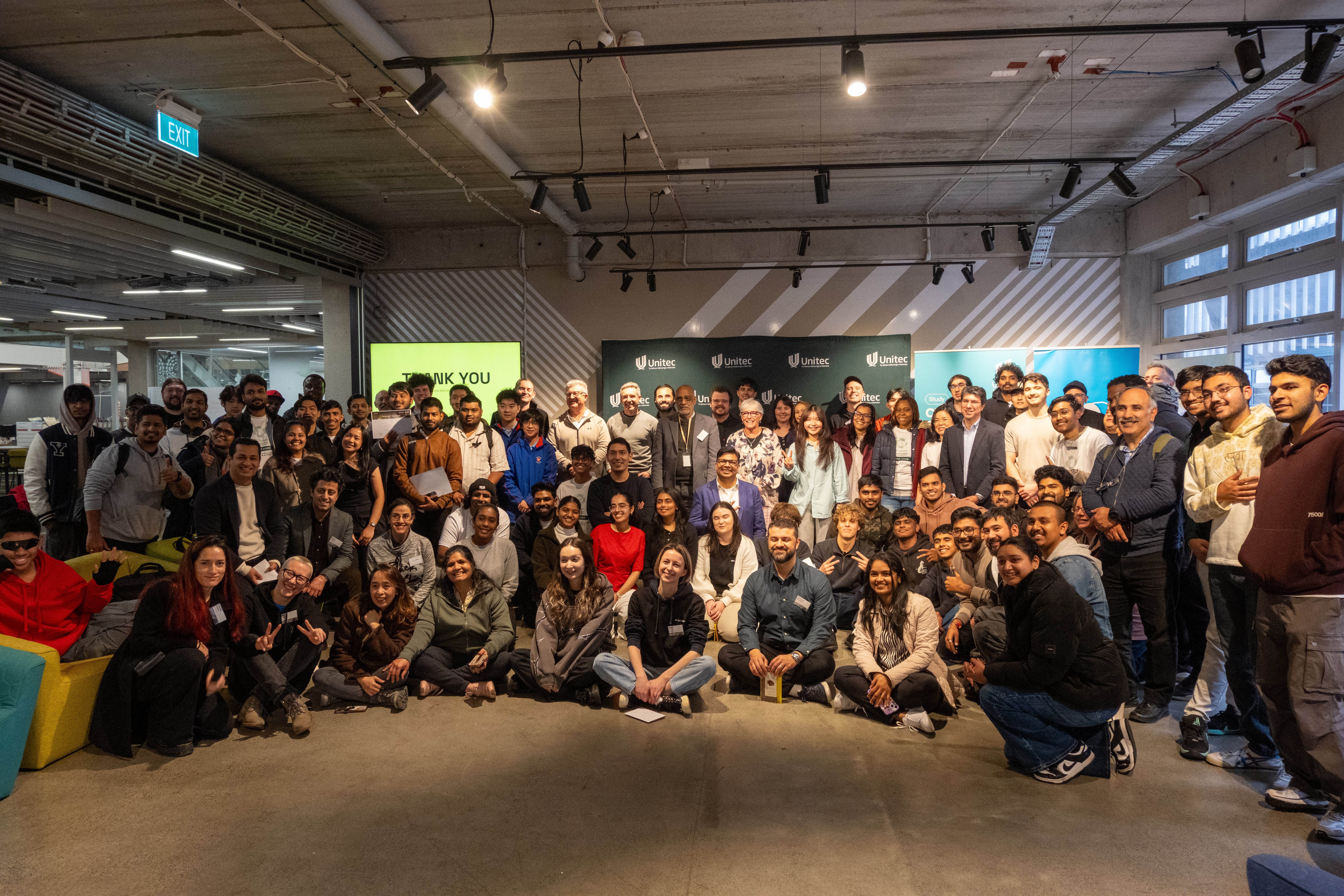
Last week I was involved in an AI for Good hackathon, one of a series of similar events happening around the country. Husain wrote about the experience while it was happening, so I won't try to retell that story. But I've been reflecting about it since, particularly in the context of this series.
Hackathons are interesting economic objects. On paper, you can count the obvious inputs: the hours people contributed, the venue, the technology, perhaps the food and the travel. You could put prices against those things and arrive at something that looked like a reasonable estimate of what the event cost.
But it could never explain where most of the value came from.
People arrived carrying years of experience, specialist knowledge, relationships, credibility, half-formed ideas, useful failures, pattern recognition and an understanding of particular problems that had often taken much longer to acquire than the hackathon itself lasted.
Someone knew which technical approach was likely to work. Someone else knew why a superficially elegant solution would fail in the real world. Another person knew who ought to be in the conversation.
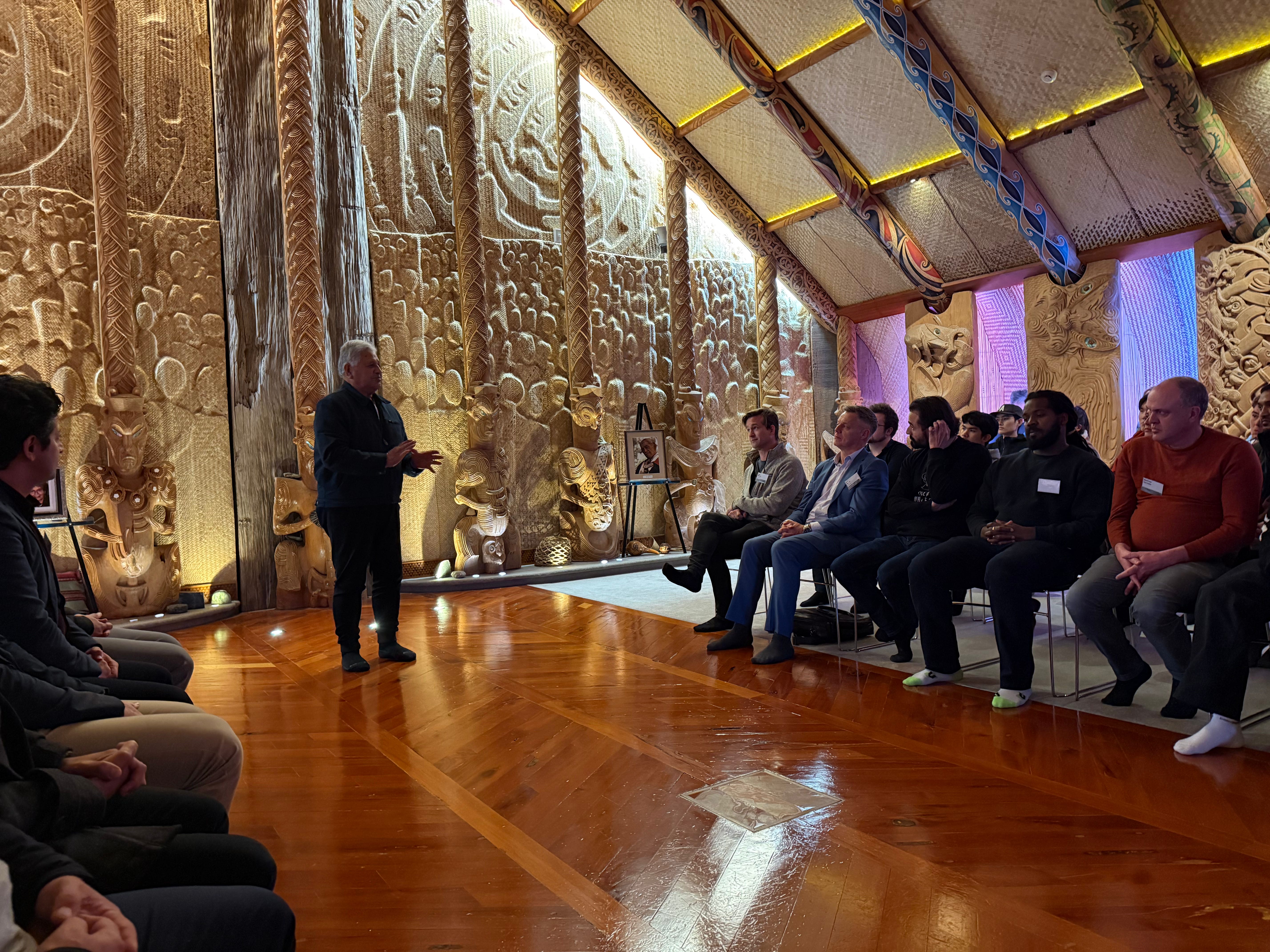
People shared methods they had spent years learning, made introductions without asking what they would get back, tested each other's assumptions and helped improve ideas they didn't own.
The AI was part of it, obviously, but so was an enormous amount of human and social infrastructure that no organiser had created for the occasion. Seen Ventures and the wider team did an amazing job, but we borrowed from a commons that already existed.
That’s stayed with me because the two forms of capital I wrote about last week, trust and human effort, are relatively easy to locate. While they might be poorly measured and badly rewarded, we can at least point to the people contributing them.
This week’s forms are more difficult.
They are intellectual capital, natural capital and cultural capital, and what links them is that none of them can honestly be described as the product of a single person or a single transaction. They accumulate over time. We inherit them, draw from them, add to them and, if things go well, leave more behind than we found.
They are things we hold in common.
Our economy depends on them constantly, but it is much less accomplished at paying them back.

Knowledge didn’t begin with the patent
Intellectual capital is the easiest of the three to recognise because conventional economics already has a language for some of it. We understand intellectual property. We value patents, software, databases, brands, proprietary systems and formal research.
Companies routinely talk about their knowledge assets, and investors are comfortable assigning enormous value to businesses whose physical assets are relatively modest.
But that only describes the portion of knowledge we have managed to put a fence around. Most useful knowledge has never been patented. Much of it could not be.
There is the knowledge held by someone who has worked in an industry for thirty years and can see a problem coming before everyone else does. There is knowledge passed between generations in a family or community. There are methods refined through practice rather than formal research.
There is open-source code maintained by people who may never meet most of its users. There is local knowledge about a place, a population or an ecosystem that simply doesn’t exist in any central database.
There is also the knowledge that sits between people: knowing who to call, who has tried this before, which question hasn’t been asked yet, or which apparently unrelated piece of information suddenly matters.
We saw plenty of that at the hackathon.
The useful contribution was rarely just “I know how to use this technology.” More often it was a combination of technical knowledge and context: I understand the tool, I understand this problem, and I understand enough about the people affected by it to know where the obvious solution will break.

That knowledge is capital in a very practical sense. It increases what becomes possible, but the problem comes when we confuse the ability to capture knowledge with the act of creating it.
Our existing system is very good at creating ownership around the last leg of a much longer journey. A company can build a proprietary product on top of decades of publicly funded research, open standards, open-source software, community knowledge and the accumulated expertise of its employees.
None of that means the company has done anything wrong. Investment, invention and execution all deserve reward.
But the clean story - we built this, therefore we own the value - becomes harder to sustain once you look far enough upstream.
AI makes the question particularly difficult to ignore.
Whatever else we think about it, AI is forcing us to confront questions about accumulated knowledge, contribution, attribution and ownership at a scale we haven’t had to before. The technology may be new, but the underlying economic question isn’t.
Who gets to capture the value created from knowledge that no one actor created alone?
I don’t think the answer is that everything must be free, or that intellectual property is inherently extractive. People need incentives to invest, experiment and build things. There are good reasons to protect genuinely original work.
What I’m interested in is what comes before that. If a successful product, organisation or technology emerges from a much larger commons of knowledge, what obligations travel with that success? Can we recognise the people and communities who helped create the conditions from which the value emerged, even when their contribution isn’t represented on the cap table?
That feels much closer to the question Collaborative Capital needs to answer.
Nature doesn’t send an invoice
Natural capital makes the accounting problem even more obvious.
A river contributes to an economy. So does healthy soil, a forest, pollinators, fisheries, clean air and a stable climate. We don’t need to romanticise nature to say that; they provide real things on which economic activity depends.
We are generally happy to describe those things as resources when we want to use them. We become much less precise about their value when the cost of using them appears somewhere else.

For a very long time, that somewhere else was conveniently labelled an externality.
It is an extraordinary word when you think about it. If the benefit occurs inside the transaction but the damage occurs outside it, the accounting system has historically been quite comfortable recording one and treating the other as somebody else’s problem.
Often that somebody else hasn’t been born yet.
There is a lot of work now trying to correct this. Natural-capital accounting, carbon pricing, biodiversity measures and environmental reporting are all attempts to make visible what traditional financial accounts left out. I think that work matters.
I’m less certain that putting a better price on nature is enough.
If we take the existing economic model and become more sophisticated about calculating the monetary value of a forest, we have certainly improved the model. But we may not have changed the underlying relationship. A forest with a better spreadsheet is still a forest being considered primarily in terms of what humans can extract from it.
That is where ideas such as kaitiakitanga matter.
Kaitiakitanga is often translated into English as guardianship or stewardship, and that is a useful starting point, but only a starting point.
In te ao Māori, people are not separate from the natural world, standing outside it and deciding how best to manage it. They are part of it. Kaitiakitanga is about the responsibilities that come with that relationship: caring for and protecting whenua, wai and the wider environment, including for the generations that come after us.
The role of kaitiaki is grounded in place and community, and the way kaitiakitanga is understood and practised can vary between iwi, hapū and marae.
That distinction matters. "Stewardship" in an English business context can still imply that the thing being stewarded is fundamentally an asset: something over here that we are responsible for managing well. Kaitiakitanga starts somewhere different. The relationship comes first, and with the relationship comes responsibility. It is not simply a question of how much of a resource we can use sustainably, but of what obligations we have because we are connected to it in the first place. Te Ara describes kaitiakitanga not just in terms of protection, but through a worldview in which people are part of the natural world rather than above it.
That distinction matters. Viewing "stewardship" in a purely Western context can often imply that the thing being stewarded is fundamentally an asset: something over here that we are responsible for managing well. Kaitiakitanga starts somewhere different.
The relationship comes first, and with the relationship comes responsibility. It is not simply a question of how much of a resource we can use sustainably, but of what obligations we have because we are connected to it in the first place. Te Ara describes kaitiakitanga not just in terms of protection, but through a worldview in which people are part of the natural world rather than above it.
I need to be careful here, because that explanation is necessarily incomplete. As a Welshman living in Aotearoa, I don't have the standing to explain kaitiakitanga on behalf of Māori, and I certainly don't want to take a concept from te ao Māori, translate it into the language of economics or management and congratulate myself on discovering a more enlightened form of capitalism.
That would rather spectacularly miss the point.
We have guest posts written by some fantastic Māori writers later in the series, and I’m particularly looking forward to those because they can go beyond the definitions I can offer here.
There are insights embedded in these ideas - about relationship, responsibility, reciprocity, place and what it means to think across generations - that often go unspoken when Māori concepts are translated into a couple of convenient English words.
Some things are difficult to see from outside a worldview precisely because, from inside it, they don’t need explaining. I want to make room for those perspectives in their own voice rather than filtering everything through mine.
What I can do here is recognise the challenge kaitiakitanga presents to the economic assumptions I’m examining.
Imagine a stand of native forest that has been protected for generations. We can calculate a timber value. We can probably estimate tourism value, carbon value and biodiversity value too, with varying degrees of confidence.

What is much harder to represent is the contribution made by the people who chose, repeatedly, not to realise the immediate financial return. Their stewardship created something. It maintained options for people who came after them.
It protected ecological relationships that no future investment could simply reconstruct once destroyed.
Our usual economic framing tends to make the moment of extraction visible because that is when a transaction occurs. Kaitiakitanga asks us to pay attention to everything that made continued abundance possible before the transaction ever arrived.
Why isn’t that contribution treated as productive? One of the principles I keep coming back to in Collaborative Capital is that maintenance is a form of value creation.
Caring for something so that it remains healthy, useful or available to others is economically meaningful, even though our systems tend to reward the transaction more visibly than the stewardship that made the transaction possible.
Nature is perhaps the clearest example of that failure, but it isn’t the only one.
Culture is not decoration
Cultural capital is the form I find hardest to write about cleanly, perhaps because I feel it more personally.
By culture I mean language, identity, heritage, belonging, story, memory, music, design, customs, humour, food, ways of gathering, ways of understanding a place - all the things accumulated over time that make a community distinctive rather than interchangeable.
Culture creates enormous amounts of economic value.
Tourism depends on it. Cities trade on it. Brands borrow from it. Property values are affected by it. Creative industries draw from it. Businesses use language, imagery and stories because those things carry meanings that the business did not create from scratch.
Yet the communities that carried those meanings into the present frequently own very little of the resulting value.
Sometimes the extraction is blatant: traditional knowledge or design is taken, repackaged and sold without meaningful consent, acknowledgement or return.
Often it is subtler.
A neighbourhood becomes desirable because of the people, independent businesses, music, food and culture that made it interesting. That desirability is converted into property value. Eventually the people who created the character of the place can no longer afford to live there.
A language becomes useful in a branding exercise once somebody has decided authenticity is commercially valuable. A community’s story becomes someone else’s content.
Culture becomes a texture you can apply to a pitch deck.
Being Welsh in Aotearoa probably makes me particularly alert to this, because finding a new home, thousands of miles away from where you grew up from has a habit of making the things you once took for granted much more visible.
Welshness isn’t something I spend every day consciously thinking about, but it appears in relationships and in small moments. Hearing a Welsh accent unexpectedly. Finding another Welsh person on the other side of the world and discovering that the normal introductory steps somehow get skipped.
A place name, a joke, a song, a reference that doesn’t need explaining. Even the peculiar emotional investment in fifteen people wearing red shirts chasing an oval ball around a field.

Sport is an interesting example because, rationally, it is ridiculous how much meaning we can attach to it. Wales winning or losing a rugby match doesn't alter my material circumstances in the slightest, and yet it can produce an entirely different emotional response.
Thousands of people who have never met suddenly experience themselves as part of the same thing. That's not really about rugby. Rugby is simply one of the places where a shared identity becomes visible.
Language does something similar, only more deeply. Cymraeg carries a history and a way of seeing the world that doesn't translate perfectly into English. You don't have to speak it fluently to feel that its survival matters, because a language is more than a tool for moving information between people.
It holds memory. Place names tell stories. Words preserve distinctions and associations that another language may not make. When a language disappears, we don't simply lose a more complicated way of saying the same things. Some of the things themselves become harder to say.
And then there is hiraeth, the Welsh word that inevitably appears whenever Welsh people try to explain themselves to anyone else. It is usually translated as homesickness or longing, but neither quite gets there.
Hiraeth can be a longing for home, certainly, but also for a place, a time, a feeling of belonging, perhaps even for a version of home that never existed exactly as you remember it. It can be nostalgia and absence and attachment tangled together.
Living in Aotearoa has made that idea more real to me. I have a life here, relationships here and a genuine sense of belonging here. That doesn’t cancel the attachment to somewhere else. Identity isn’t a zero-sum game. You can become connected to another place without neatly detaching yourself from the first one.
In fact, some of the most interesting relationships I've formed here have come from recognising that same attachment in others. The specifics are different, sometimes profoundly so, but I recognise the importance people place on language, whakapapa, whenua, family, stories and belonging.
I also recognise the frustration when those things are treated by outsiders as colourful additions to the "real" business of economics, politics or development, as though identity were decorative rather than part of the infrastructure through which people understand obligation and relationship.
Again, I want to be careful not to collapse very different histories into one another. Welsh experience is not Māori experience, and finding an emotional resonance between them doesn't make them equivalent.
But living here has reinforced something for me: collective identity is real capital in the sense I'm using the word in this series. It connects strangers. It carries trust and memory across generations. It creates obligations between people who may never meet.
It can mobilise communities, sustain institutions, attract people to places and give meaning to things that otherwise have very little intrinsic value.
You can see this at the scale of nations too. Nations are partly institutions and borders, but they’re also stories people agree to carry together. Flags, songs, languages, sporting teams, historical memories, shared jokes and arguments about who we are all contribute to a sense of collective identity.
At its best, that identity creates connection and mutual obligation. At its worst, of course, it can become exclusionary or chauvinistic. Cultural capital is not automatically good simply because it is cultural. Like every other form of capital, what matters is how it is held and how it is used.
This is why language and story are not abstract assets when you feel connected to them. They carry relationships and identity in ways that are difficult to translate into an economic vocabulary without losing something important.
And there is an obvious danger in the phrase cultural capital itself. If the argument is that our current economic system commodifies too much, is the answer really to describe even more things as capital?
It’s a fair challenge.
I use the word deliberately, but not because I think everything meaningful should ultimately receive a dollar value. Quite the opposite. I’m interested in exposing the inconsistency in a system that happily extracts economic value from culture while pretending culture itself sits outside the economic equation.
Calling something capital does not have to mean making it tradable. It can mean recognising that it contributes to the creation of value and therefore has a legitimate claim on how that value is governed, owned and distributed.
For me, that leads to a more useful test than simply asking whether culture has been “acknowledged”:
When economic value is created from a culture, do the people who carry that culture retain meaningful agency in what happens next?
Do they have ownership? Governance? Attribution? The ability to withhold consent? A share in the upside? Some continuing control over how their knowledge or identity is used?
A thank-you in the acknowledgements is not the same thing.
The commons problem
There is an awkward tension here that runs through all three forms of capital.
If something is held in common, it can sound contradictory to talk about ownership at all. Perhaps knowledge, nature and culture should simply belong to everyone.
The difficulty is that “everyone owns it” has a habit of becoming “whoever is best positioned to monetise it owns the proceeds”.
Open access is not the same as shared power.
A commons without any mechanism for recognising contribution or governing extraction can become a very generous subsidy to whoever arrives with the most capital, the largest distribution network or the best lawyers.

Collaborative Capital cannot simply mean sharing more things. Collaboration without structure can be extraordinarily extractive. Anyone who has spent time in a community built largely on goodwill has probably seen a version of that.
The same people keep giving. Others become very good at receiving. Eventually the goodwill runs out. So perhaps the question is not whether the commons should be owned.
Perhaps it is whether value created from the commons can carry obligations back to the commons.
That might mean money in some cases. In others it might mean shared ownership, decision-making rights, attribution, access, reciprocity, investment in maintenance or obligations to future generations.
I don’t think there will be one mechanism, and I’m increasingly wary of frameworks that promise one.
What matters to me is the direction of travel. At the moment our systems are highly developed at tracing ownership forward from a financial investment, and comparatively poor at tracing obligation backwards through all the other contributions that made the return possible.
The cheque is visible.
The decades of knowledge underneath it are not.
The transaction is visible.
The stewardship before it is not.
The brand value is visible.
The culture that gave the brand meaning is not.
Once you start looking at economic activity this way, the neat distinction between “financial” and “non-financial” contributions begins to feel rather arbitrary.
Building this with other people
This is also one of the reasons I don’t want this series to consist solely of me explaining Collaborative Capital week after week.
If the thesis is that value is created collaboratively, producing a finished theory alone and broadcasting it to everyone would be a fairly strange way to test it.
Husain’s hackathon post was an early example of opening the thread up to another voice. Carolyn Rohm will also be contributing a guest post as part of this conversation, bringing her own perspective rather than being reduced to a quote inside mine.
I want more of that.
There are some things I have experience and a point of view, but there are many more where the responsible thing is to recognise the boundary of my knowledge and make room for somebody with deeper standing or different experience.
As I mentioned earlier, that matters particularly when talking about kaitiakitanga, culture and forms of community knowledge that I can observe but cannot claim.
More broadly, it is also how I hope Collaborative Capital develops: as an argument that gets better because people add to it, disagree with it, find the holes and bring examples I haven’t seen.
The AI for Good hackathons happening around the country are, in a small way, an example of the same principle. A problem is put into the middle of a room. People bring what they have. No one person possesses all of the capital required to make progress, but the combination produces possibilities that weren’t available to any of them separately.
The important question comes afterwards.
When those combinations create real value, can we build systems that remember how the value was created?
That, increasingly, feels like the heart of this project.
What comes next
There are two forms of capital left in the framework I’ve been working through: legitimacy and network capital.
They are different again, because they help determine whether all the other forms can actually do anything.
A brilliant idea without legitimacy may go nowhere. A capable person disconnected from the right networks may never encounter the opportunity in which that capability matters.
The same resource can be almost worthless in one context and enormously valuable in another because of who trusts it, who can vouch for it and what it is connected to.
Those are the forms that make the others compound.
Before I get there, though, I want to stay with this week’s question:
What do we owe to the things none of us created alone?
I suspect any serious version of Collaborative Capital will eventually need an answer.
If you had a magic wand
The question I ask in meetings, and here each week, remains the same: if you had a magic wand, what are the three things you would need right now?
Mine this week are:
Examples where a community genuinely participates in the value created from its knowledge, culture or stewardship. I’m particularly interested in mechanisms that go beyond consultation or acknowledgement and give people real agency, ownership or continuing benefit.
A good challenge to the idea of “culture as capital”. I can see why the language is useful, and I can also see the argument that translating culture into the language of capital concedes too much to the system I’m trying to question. I’d like to hear that case made properly.
Examples of valuable contributions your organisation relies on but doesn’t know how to account for. Knowledge, introductions, maintenance, credibility, care, context, convening, institutional memory, whatever it is. What would look different if it appeared on the ledger?
Now you. What are your three?
Write to me with them, and tell me if there’s anything I can help with. I read every reply, and I answer.
And again, apologies for this one arriving later than planned. I’m choosing to interpret that as evidence that ideas built in public don’t always respect the publishing calendar.