

There’s a sentence that I think is the sign of a good conversation. I say it a lot myself, and you can use it too:
“You should talk to …”
It’s often the most useful thing said in the entire meeting. The idea you were stuck on now has a path forward. The problem that looked difficult is actually something someone else has already solved. A person you thought you couldn’t reach is actually only one degree of separation away.
And once that introduction is made, you’re not arriving cold anymore. Part of the trust one person has earned travels with you.
It happens so often in our daily lives that we barely notice it. We talk about introductions as favours, and reputation as this intangible thing floating over our heads. We describe a respected organisation as having a “good name”, and we all instinctively know that our ideas will be received differently depending on who’s presenting them, who’s backing them, and how the room reacts.
On an economic level, those differences can be huge. Two founders can have equally good ideas, but one of them knows someone who can introduce them to their first ten customers. In the same way, two companies can propose the same project, but if one of them has spent decades building trust with the community it wants to work with, then it has a much better chance of success.
Even two identical pieces of information can produce very different reactions. We might act on one straight away because we trust the source, but spend the afternoon researching the other because we don’t.
That leads me to the last two forms of capital in the framework I’ve been taking you through over the last few weeks: institutional and network capital. They come last because they behave differently to the others, and often bring them all together.
Financial capital funds something, human capital builds it, and social capital creates the trust that allows people to work together. Intellectual, natural and cultural capital, held in common, make the idea smarter and provide the resources, meaning, context and continuity it needs.
But it’s legitimacy and connection that determine whether any of those things will actually go anywhere. They work together, and make the other forms compound.

The right to be believed
Institutional capital is probably easier to recognise when it’s missing. Imagine someone establishes a new organisation tomorrow and announces that it will certify whether buildings in Aotearoa are safe from earthquakes.
It may have hired some brilliant people and developed a fancy new process to do it, with all the best intentions, but you probably wouldn’t want the entire construction industry to accept its certificates by Friday.
Something else is required first. We need to believe that the organisation is competent, yes, but also that it will behave consistently. That the rules it develops actually mean something, that there’s a process when something goes wrong, and that someone can’t simply buy the result they want.
If it proves those things repeatedly over time, it builds legitimacy.
That’s what I mean by institutional capital: the credibility, built up over time, that allows decisions, standards or promises to actually carry weight.
Obviously this exists in courts and government institutions, but it isn’t restricted to them. Universities and professional bodies have it, and so do many co-operatives, charities, community groups, iwi and standards bodies. Even quite informal groups can build it.
There are people or organisations in most communities where, if they back something, people listen. Not because they have a massive marketing budget, but because people remember what happened the last ten times they said they’d do something. They kept their word.
We often talk about institutional trust as if it’s a mood people happen to be in. But trust is also something institutions produce slowly, through thousands of decisions, promises kept, and moments where the easier short-term option would have damaged something longer-term.
You can buy “brand awareness” and you can hire “credibility”. You can acquire an organisation that already has relationships, put respected people on a board, and spend a fortune telling everyone that they can trust you.
None of that is quite the same as having been trustworthy for thirty years.
Over time, with consistency and a long memory, institutional capital starts to behave like the other forms we’ve already discussed. It’s created through contribution, maintained over time, can be lost when things go wrong, and becomes enormously valuable once you have it.
But legitimacy can go wrong
The obvious counterargument is that plenty of institutions don’t deserve the trust placed in them.
Being old doesn’t make an something good, and legitimacy certainly doesn’t mean it’s always right. Institutions can become complacent or self-protecting. Professional standards should protect people from poor practice, but they can also become a way for the status quo to keep new ideas and people out of the party.
The organisations we instinctively call first can end up hearing the same voices and making the same introductions, gradually reinforcing the same circles. Sometimes an institution can keep its authority long after the behaviour that originally earned it has disappeared.
So recognising institutional capital cannot mean automatically deferring to institutions. Like every other form of capital in this series, it can be used well or badly. Financial capital can finance something destructive, cultural capital can become exclusionary, and a powerful network can become a closed club. Institutional capital can become gatekeeping.
The important question isn’t just whether an institution has legitimacy. We also need to ask where it came from, who helped build it, how it’s maintained, who gets access to the benefits it creates, and what happens when the institution stops earning it.
An organisation can spend decades building trust and then lose a huge amount of it through a handful of bad choices. The name can remain the same and the logo can still be familiar, but once people stop believing the promise, something of real value has disappeared.
If you look at it like that, maintaining legitimacy is work too. It’s similar to the stewardship I wrote about in the last post: repeatedly doing the things that may not be particularly glamorous, but that keep the whole system useful for everyone else.

Borrowing someone else’s credibility
Imagine a new startup announces a partnership with a respected university, or a new programme gets the backing of a government agency. We all understand why that matters, because people and organisations borrow each other’s institutional capital all the time.
Nothing about the underlying idea necessarily changed overnight. What changed was the legitimacy surrounding it.
There’s nothing wrong with that. It’s one of the ways trust is supposed to work. Someone who has earned credibility can use it to help another person, project or organisation get a fair hearing.
But once we recognise legitimacy as capital, the same question that keeps appearing throughout this series comes back: who created the thing being used?
An institution that has existed for decades didn’t manufacture its reputation in a branding workshop. Thousands of people may have contributed to it: staff doing their jobs properly, members holding one another to standards, communities continuing to engage, and leaders refusing to take the short-term option when it would have damaged long-term trust.
When a new organisation borrows that credibility, it is drawing from something those people collectively built.
And this is where institutional capital starts to merge into network capital, because credibility rarely travels on its own. It travels through relationships. Someone has to make the introduction, say “I know them, they’re good”, and put a little of their own reputation on the line.
Then the network starts doing something none of the individuals inside it could do alone.
The most valuable thing in your phone
Think about the genuinely useful people in your contacts. I don’t mean the person with the grandest job title or the most LinkedIn followers. I mean the people you can actually call.
The person who understands an area you know nothing about, or knows someone who does. The person with no tolerance for bullshit, who will tell you when an idea is terrible rather than politely sending you down a rabbit hole for the next six months. The person whose introduction actually gets answered.
There’s huge value in all of that.
This is related to social capital, but I think it’s important to distinguish the two. Social capital is the quality of a relationship: the trust, reciprocity and willingness to act for one another. Network capital is what becomes possible when those relationships connect to other relationships.
I was part of the NatWest Accelerator programme a few years ago, and there’s a group of nine of us from it who have become some of my closest friends. We’ve been in the trenches together for nearly a decade. We know when to call each other out if something isn’t right, which happened to me fairly recently, and we genuinely trust one another.
That’s social capital.
But between us, our networks probably reach tens of thousands of people across multiple countries and industries. That doesn’t suddenly make the group cleverer, but it makes our collective capability much stronger. Information travels further, problems can find someone who has already solved them, and some of the best advice comes from people completely outside the industry you happen to be working in.
Those connections make the capital we already hold much more useful. That’s network capital at work.
It’s also why those diagrams of networks, with neat circles and pretty lines joining everyone together, never really capture what’s going on. I have more than 10,000 LinkedIn connections, but the number of people I would actually call to help solve a difficult problem is much smaller.
Not every connection is equal. Some carry years of trust and personal history. Others amount to little more than somebody pressing “Accept” on a LinkedIn request five years ago.
It’s the connective tissue that brings the real value.
You’ve already met Carolyn and Husain through this series, two people whose insights and support I really value. You’ll meet more people like them as it progresses too.
Aotearoa is small enough to see it live
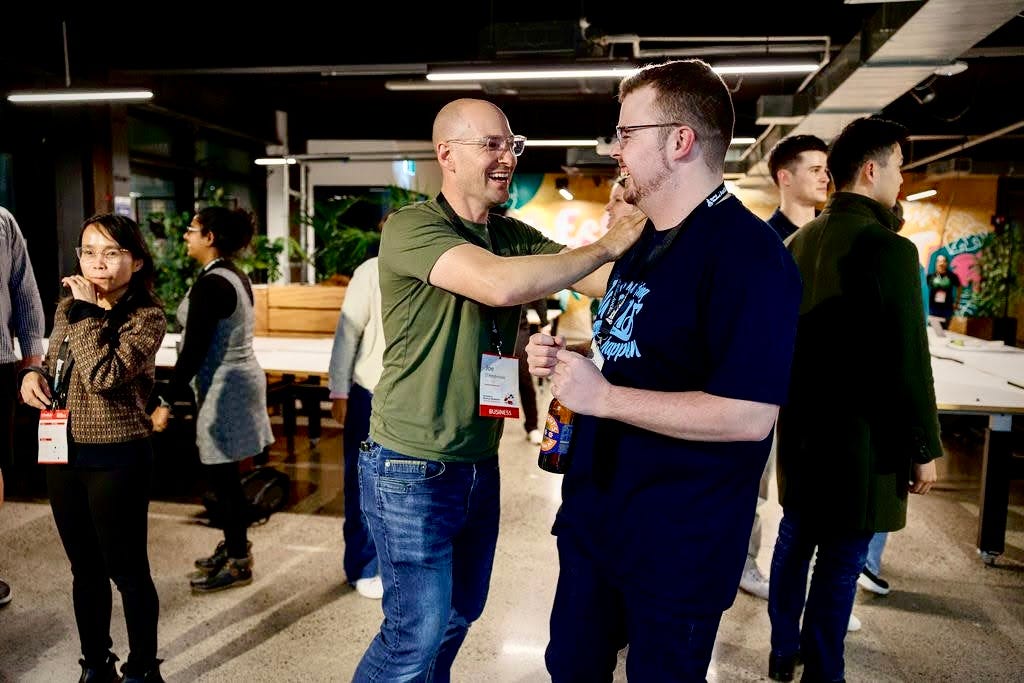
One of the things I love about living in Aotearoa is that the degrees of separation are short enough that you can see the value of networks every day.
I can meet someone for coffee tomorrow and they’ll mention somebody I should talk to. The introduction happens, and it turns out that person worked with someone I spoke to three months ago. Something from a completely unrelated conversation suddenly becomes useful again.
It happens to me constantly.
And some of the most valuable things people have given me here have cost almost nothing in a conventional financial sense: a name, an email address, a message sent on my behalf. “You should meet her.” “I think you two would get on.” “I’ve sent this to someone who might be interested.”
Sometimes nothing comes of it. Other times it changes the direction of a project, creates a piece of work, solves a problem or starts a relationship that lasts for years.
That doesn’t mean small networks are automatically good. They can become very closed, very quickly. The same names can come up again and again, and a country with relatively few degrees of separation can still feel enormous if you happen to be on the wrong side of them. Reputation can also travel much faster than nuance.
But when those networks are open and generous, they’re incredibly productive.
The strange thing is that we rarely treat connecting people as a real contribution to whatever eventually gets built. If an introduction materially changes the probability of success, though, then surely something was contributed.
Perhaps not something that needs an invoice attached to it, but something worth recognising.
The platform problem
Technology companies understand the value of networks extremely well. Some of the most valuable companies of the last twenty years have been built around a simple idea: the software itself is only part of the product. The people using it create another part.
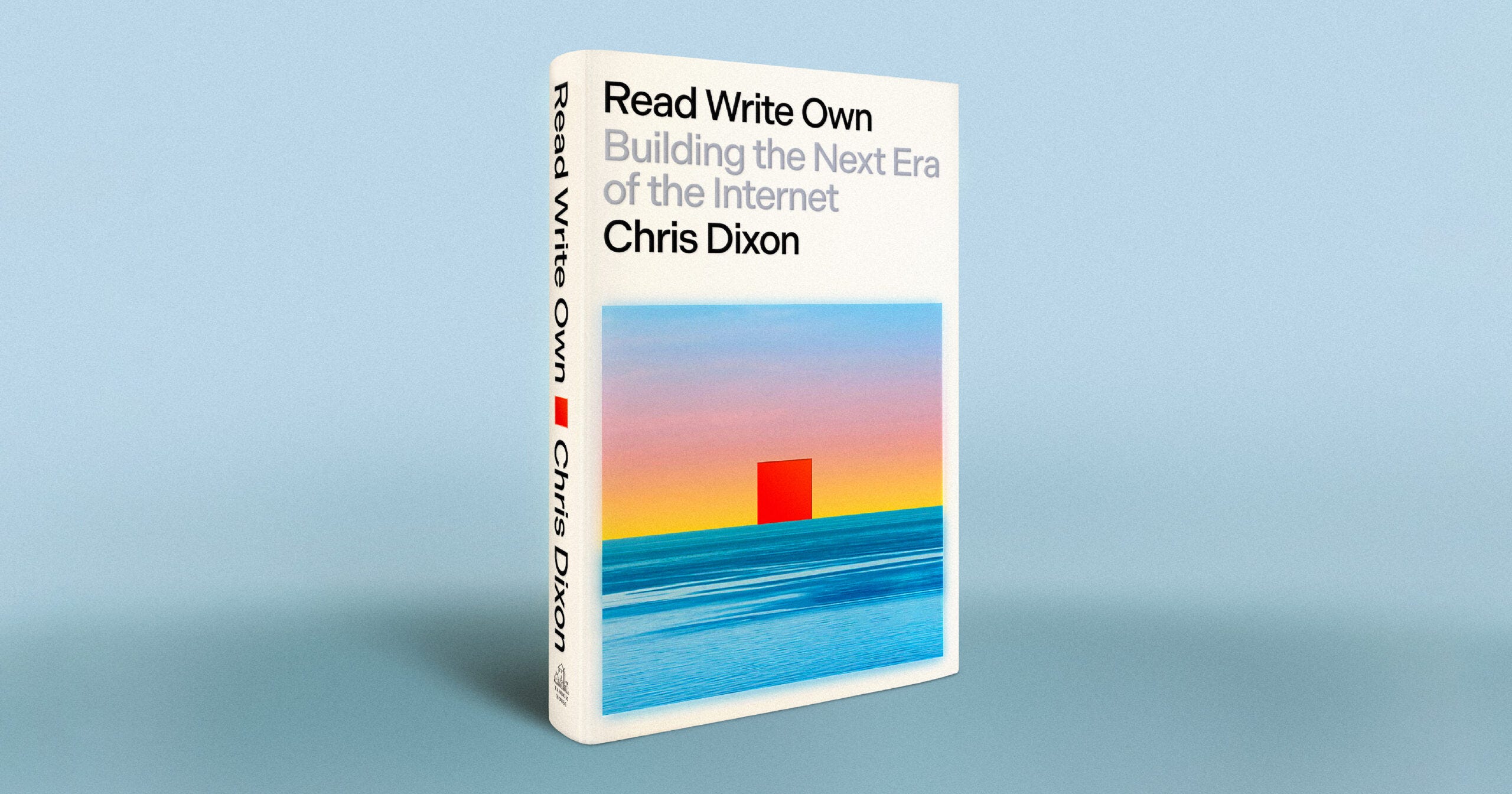
One of the best explanations I’ve read of this is Chris Dixon’s Read Write Own. It’s usually presented as a manifesto for Web3 and blockchains, which it is in part, but I think that massively undersells it. What I found more interesting was his history of how technology platforms developed, why some became so powerful, and what happens to the relationship between a platform and its users once network effects start to kick in.
Marketplaces make the dynamic particularly easy to see.
Imagine launching Airbnb with no hosts. It doesn’t matter how beautiful the app is, because there’s nowhere to stay. Add thousands of hosts but no guests and you have the opposite problem. The value starts to emerge when both sides arrive in sufficient numbers that people can reliably find one another.
The company has clearly created something important. It built the software, designed the marketplace, attracted the first participants, dealt with payments and trust, and solved all the awkward operational problems involved in getting strangers to transact with each other.
But the company can’t create the liquidity by itself.
Hosts create the selection; guests create the demand. Drivers make Uber useful to passengers, while passengers make it worthwhile for drivers to show up. Sellers give a marketplace its inventory and buyers give that inventory a market.
Each new participant can make the system more useful for people they will never meet. That is network capital being created in real time.
Dixon describes what can happen next as the “attract–extract cycle.” Early on, a network needs its participants more than the participants need it, so the economics tend to be generous: subsidies, free tools, open APIs and incentives to persuade people to join and build.
Once the network is established, the balance can shift. If you’re the only seller on a marketplace, you have very little to lose by leaving. If you’ve spent ten years building a business inside a marketplace with millions of customers, leaving is a very different proposition.
The network that participants collectively created becomes part of what keeps those same participants there.
Dixon uses the idea of the take rate to make this economic: the percentage of the value passing through a marketplace that the platform keeps for facilitating it. As network effects strengthen, the owner of the platform can gain more power over how the value created across that network is divided.
His proposed answer is the “own” part of Read Write Own: different forms of digital ownership, particularly through blockchain networks. You don’t have to agree with all of that prescription to find the diagnosis interesting.
Because the distinction I keep coming back to is much simpler.
The company created the platform, but the participants created the network.
Those two things are intertwined, and neither would be especially valuable without the other. Yet our ownership structures are generally very good at remembering the first contribution and extraordinarily poor at remembering the second.
This isn’t an argument that marketplaces shouldn’t make money, or that building the underlying technology doesn’t count. Of course it does. A marketplace that successfully solves matching, trust, payments, discovery and all the other problems required to make a network function has created genuine value and should benefit from doing so.
The question is whether it follows that it should own all of the network value that accumulates around it.
That feels much less obvious.
Nor does the alternative need to mean that every Airbnb booking, LinkedIn introduction or Reddit comment produces a tiny equity allocation. That would be absurdly complicated and a fairly effective way of ruining normal human interaction.
But we also don’t have to pretend the contribution never existed.
There’s a lot of open space between those positions, and I suspect some of the most interesting models for Collaborative Capital will eventually be found there.
AI is making this more important, not less
There’s another reason I think these final two forms of capital matter now.
AI is rapidly making some forms of capability cheaper and more widely available. It can help people write code, research a market, make a presentation, generate an image, analyse data or turn an idea into something surprisingly complete in a fraction of the time it once took.
That is extraordinary, and of course I use it myself every day.
But as the cost of producing something falls, some of the other constraints become much more visible. It becomes easier to create an answer, but not necessarily easier to know whether that answer should be trusted. It becomes easier to build a prototype, but that doesn’t mean anyone will use it. More people can create professional-looking work, which makes the question of who sits behind it, whose judgment you trust and who is willing to vouch for it more important.
AI can also accelerate network effects. An individual with the right tools and a good network can operate with a level of reach and capability that previously required an organisation. Knowledge can move between communities faster, and people can find one another or translate between fields much more easily.
But the opposite is true too. Closed networks can compound their advantage faster, and if a small number of platforms mediate the relationships, knowledge and infrastructure everyone else relies on, even more of the resulting value can concentrate at the centre.
So I don’t think AI reduces the importance of human legitimacy and networks. I think it makes them more valuable.

Being connected changes the value of what you already have
This is why I’ve left network capital until last. It doesn’t sit neatly beside the other forms; it changes what they can do.
Someone can have an extraordinary piece of intellectual capital — an idea, invention or insight — but if nobody knows they have it, its practical value may remain close to zero. Connect them to the right collaborator, customer or investor and the same idea suddenly has somewhere to go.
The same financial investment can be far more useful when it arrives with knowledge, credibility and introductions attached. Human capability becomes more useful when it reaches the opportunity that needs it. Cultural or natural capital can have greater influence when communities connect into wider systems of policy, expertise or financing.
The point is the same across all eight forms: they don’t sit in separate boxes. They interact, overlap and increase or diminish one another.
That’s where the interesting stuff starts.
So, all eight…
Over the last few weeks, I’ve worked through eight forms of capital:
Financial capital: the money and financial assets we already know how to count.
Human capital: our time, effort, skills and capabilities.
Social capital: trust, relationships and reciprocity.
Intellectual capital: knowledge, ideas, data, experience and methods.
Natural capital: the living systems and resources on which everything else ultimately depends.
Cultural capital: language, identity, memory, story and shared meaning.
Institutional capital: legitimacy, governance and the accumulated credibility that allows a promise or standard to mean something.
Network capital: the additional value created when people, knowledge, institutions and all those other forms of capital become connected.
I don’t think those categories are set in stone, and I’m definitely not suggesting we convert every friendship, forest, language and introduction into a number on an enormous Excel spreadsheet.
Someone will probably find a ninth form. Someone else might tell me two of mine are actually the same thing. Economists have been arguing about what should count as capital for centuries, so of course I don’t think I’ve settled the question for them.
The categories are useful only if they help us see something that was previously easy to ignore.
And the central point is quite simple: financial capital is not the only thing that makes things happen.
We all know that in practice. No sensible founder thinks money alone builds a company. No organisation believes replacing every person in the building tomorrow would leave its culture, relationships and knowledge unchanged. No investor would value two otherwise identical businesses the same if one had an extraordinary team, a trusted reputation and access to a powerful network while the other had none of those things.
We already behave as though these things are valuable. We just become strangely selective about them when it’s time to decide who owns what was created.
That’s where Collaborative Capital starts
For me, this is where Collaborative Capital has to become more than a framework.
If someone contributes money, we have a sophisticated set of structures for remembering that contribution. They might get equity, interest, voting rights, preference rights, a revenue share or a seat on the board. Contracts make sure that capital continues to have a claim on whatever happens next.
For nearly every other type of contribution, our answers become much more vague. You might get thanked. You might get “exposure”. Perhaps you get experience, a credit, a useful relationship or the promise that somebody will return the favour later.
Sometimes that’s completely appropriate. I don’t want a world where recommending a friend for a job creates an invoice, or every useful coffee ends with us working out who owns 1% of the conversation. Trying to financialise every act of generosity would destroy exactly the kinds of relationships I’m arguing are valuable.
But there’s a huge gap between everything becoming a transaction and only financial capital creating ownership.
That’s the territory I’m interested in.
The idea behind Collaborative Capital isn’t that everything valuable needs a price. It’s that meaningful contribution should be capable of creating a meaningful claim on the value it helps produce.
Sometimes that might be financial. In other circumstances it could mean governance, access, attribution, stewardship, participation in future decisions or an obligation for value to flow back to the community that helped create it.
I don’t expect one mechanism to cover every situation, and I’m increasingly sure that trying to create one would be a mistake.
The principles matter first. People shouldn’t become invisible simply because the capital they had to contribute wasn’t money.
Now we get to try and break it
Nine posts in, that is the core of the argument.
I’m conscious that written out in a sequence like this, it can all start to sound suspiciously tidy. Eight forms of capital, a problem with extraction, and a framework that promises to recognise contribution more fairly.
The world is not normally that cooperative.
So the next part of this series needs to be harder on the idea.
This week, I’m opening the thread up again with a couple of guest contributions exploring some of these questions from perspectives other than mine. One of the contributors is, by the standards of the people who have written here so far, a slightly unusual one. I’ll leave that there for now.
Next week, I want to actively make the case against Collaborative Capital.
Isn’t this just a co-operative with more terminology? Is it socialism with a better pitch deck? If contribution is hard to measure, who decides what counts? Does turning care, culture or relationships into “capital” actually reproduce the worldview I’m claiming to challenge? Would any of this survive contact with incentives, law, power and people behaving badly?
Those aren’t objections to bury in a FAQ once the idea is “finished”. The idea is that it keeps developing, so it may never really be finished. If the framework can’t survive the questions, it isn’t very useful.
So we’ll take them properly.
After that, I want to start putting some meat on the bone. What would Collaborative Capital actually look like in practice? How might ownership work? What structures already exist that we can borrow from rather than reinvent? Who could credibly host or govern something like this? What are we actually building, testing or doing rather than simply writing about?
At some point a framework has to leave the page.
We’re nearly there.
If you had a magic wand ✨
The standing question I ask in meetings, and as always here each week: if you had a magic wand, what are the three things you’d need right now?
Mine this week:
People who have built institutions that genuinely earned trust over time. I’m interested less in branding and more in the slow, mostly invisible decisions that make people believe an institution will keep its word.
Examples where connecting previously separate people, communities or organisations created value that can actually be demonstrated. Federations, ecosystems, co-operatives, networks — particularly where some of that value flowed back to the people who created the connections rather than collecting entirely at the centre.
People who disagree with this. We’re about to spend some time attacking the idea ourselves, and I’d rather not invent weak counterarguments when there are people reading this who can make much better ones.
Now you. What are your three? Send me a message with them, and tell me if there’s anything I can help with. I read every reply, and I answer.